
The Dragons of the Isle of Wight: Tree, Stone and Sacred Remembrance
▶️ Press play to listen to the audio overview for this post
The Call of the Dragon Tree: A pilgrimage into presence, joy, and ancient wisdom
Some places do not simply appear on a map, instead they call.
The Isle of Wight was one of those places for me. Long before I arrived, there was a quiet but insistent pull, the familiar whisper I have learned to trust over the years. The island itself carries something ancient. It is Jurassic land, known for its dinosaur history, deep time etched into the bones of the earth.
Some see the Isle of Wight as a dinosaur.
For me, it has always felt like a dragon.
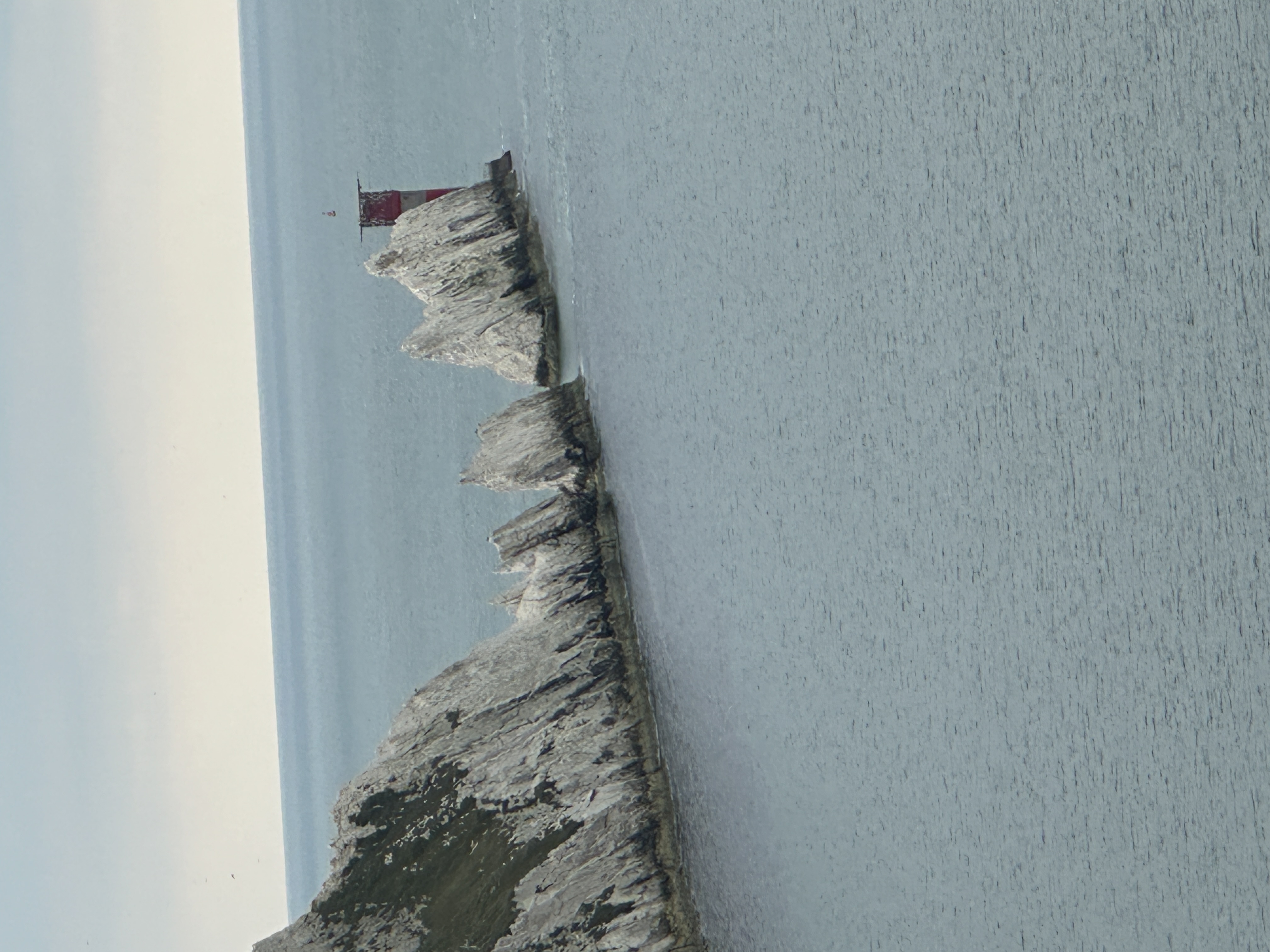
The Needles stand like the tail of the dragon, sharp and unmistakable, rising from the sea. The body of the island curves and stretches, and at the far end, the head rests, sometimes locally known as a sleeping dragon. From the shore of my local beach where I walk, I can see the the Needles, unless its a foggy day and for a few months the Isle of White was calling me again, this time for a mission rather than a holiday visit.
And so, as is often the way on my path, the message came through clearly:
Find the dragon on the island.
My first thought was the island herself is a dragon, but the whisper was 'no, look for the dragon ON the Island...' And of course, on the Isle of Wight, there is the Brighstone dragon tree across the Buddle Brook! A local legend records that Saint Tarquin of Vectis returned after taking part in the Crusades to find the villagers under siege from a dragon. After a month of praying and fasting in the village church, he picked up a staff made of hazel and lunged at the beast. It instantly turned to wood and the village was saved.
Walking the Dragon Lines
Before you reach the Dragon Tree, there is a walk, and it feels important.
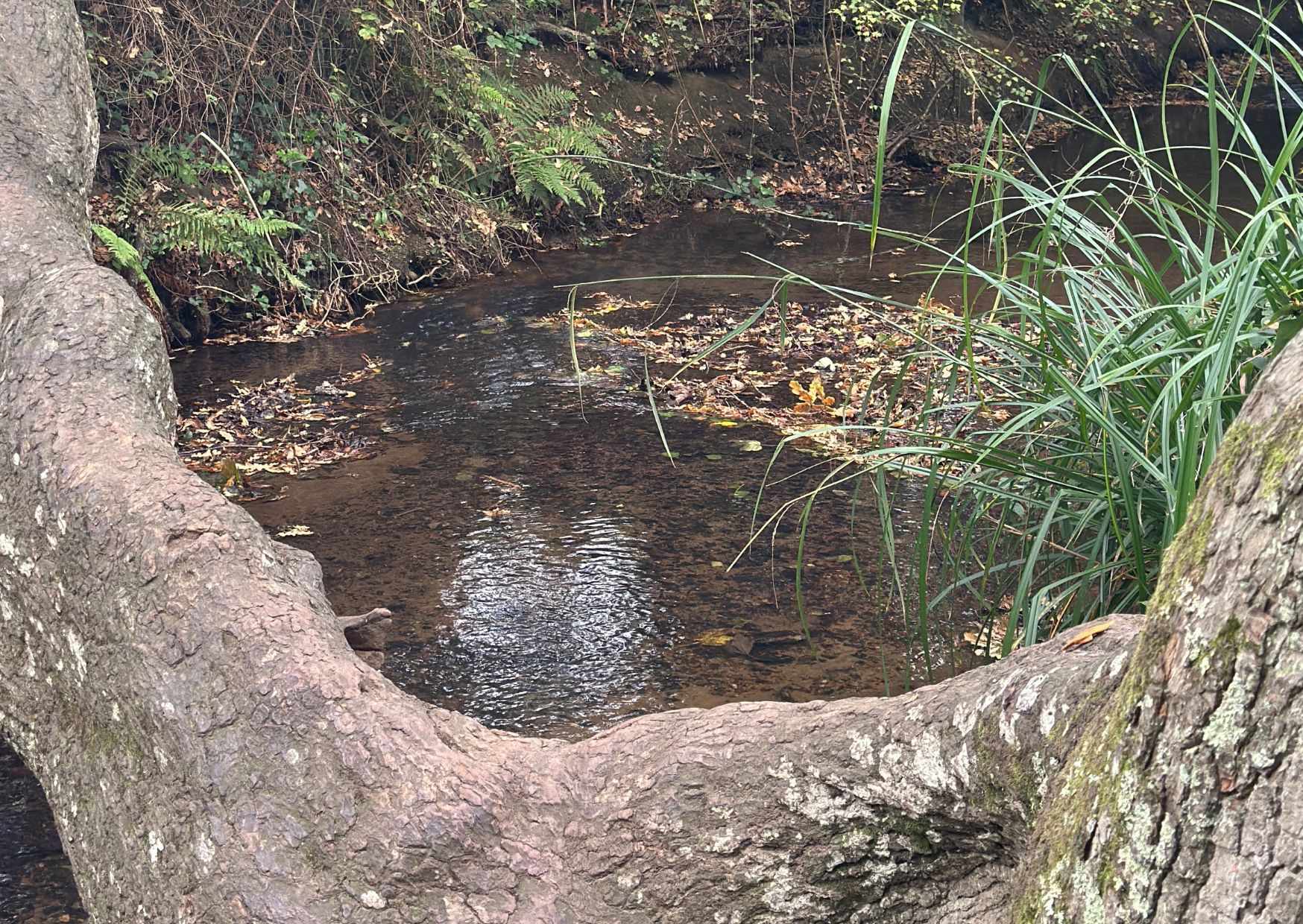
You pass through gentle springs, with water flowing softly through the land. I have long noticed that dragon lines often follow water. They twist and turn with springs and streams, weaving through the landscape quietly but powerfully. Water holds memory. It carries energy. It softens the path.
There is a small bridge you cross, and something about that moment feels ceremonial, like crossing a threshold. A simple walk becomes a pilgrimage. You leave the everyday behind and step into something older, something more playful and sacred all at once.
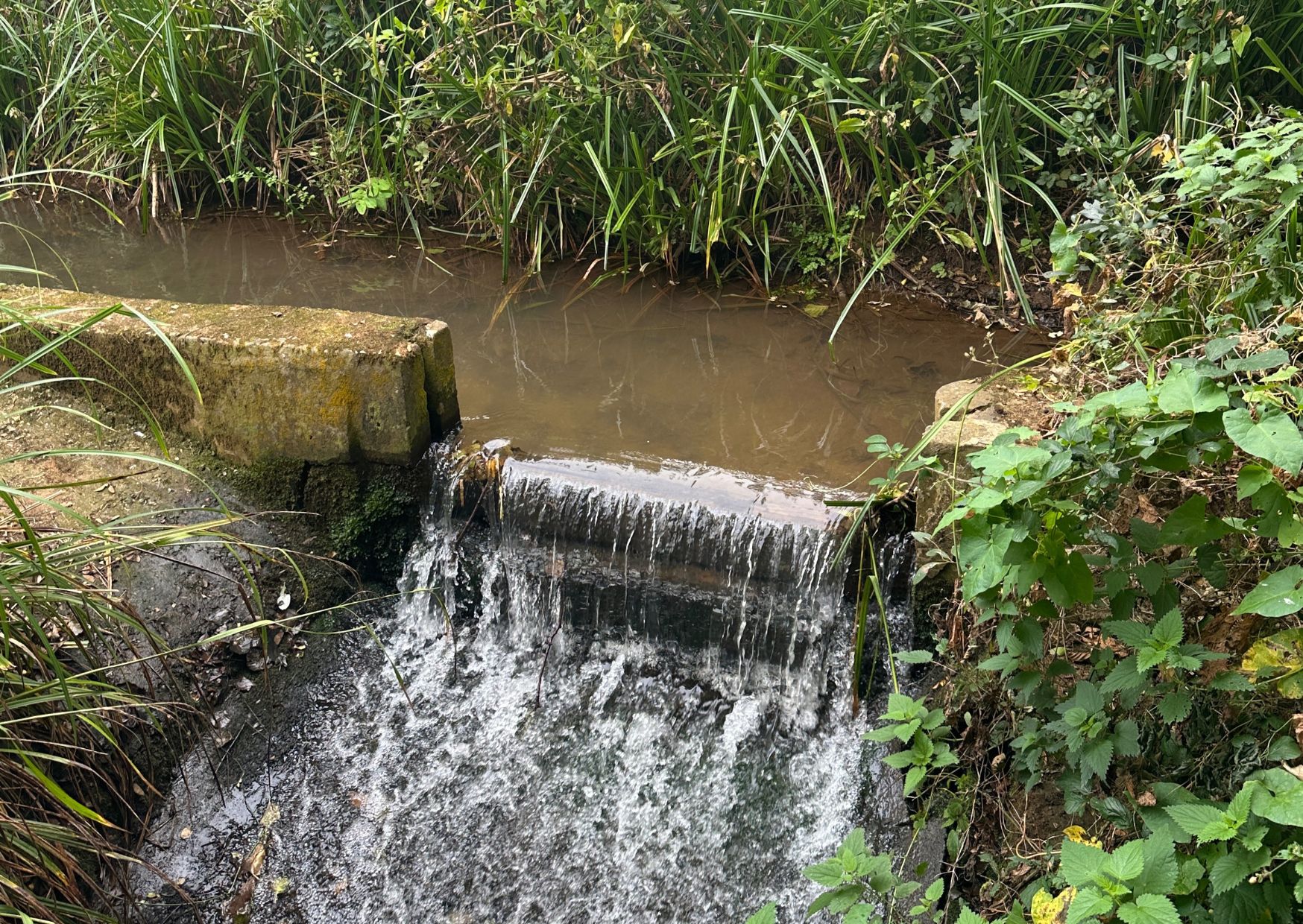
Just beyond the water, the Dragon Tree reveals itself.
Meeting the Dragon Tree
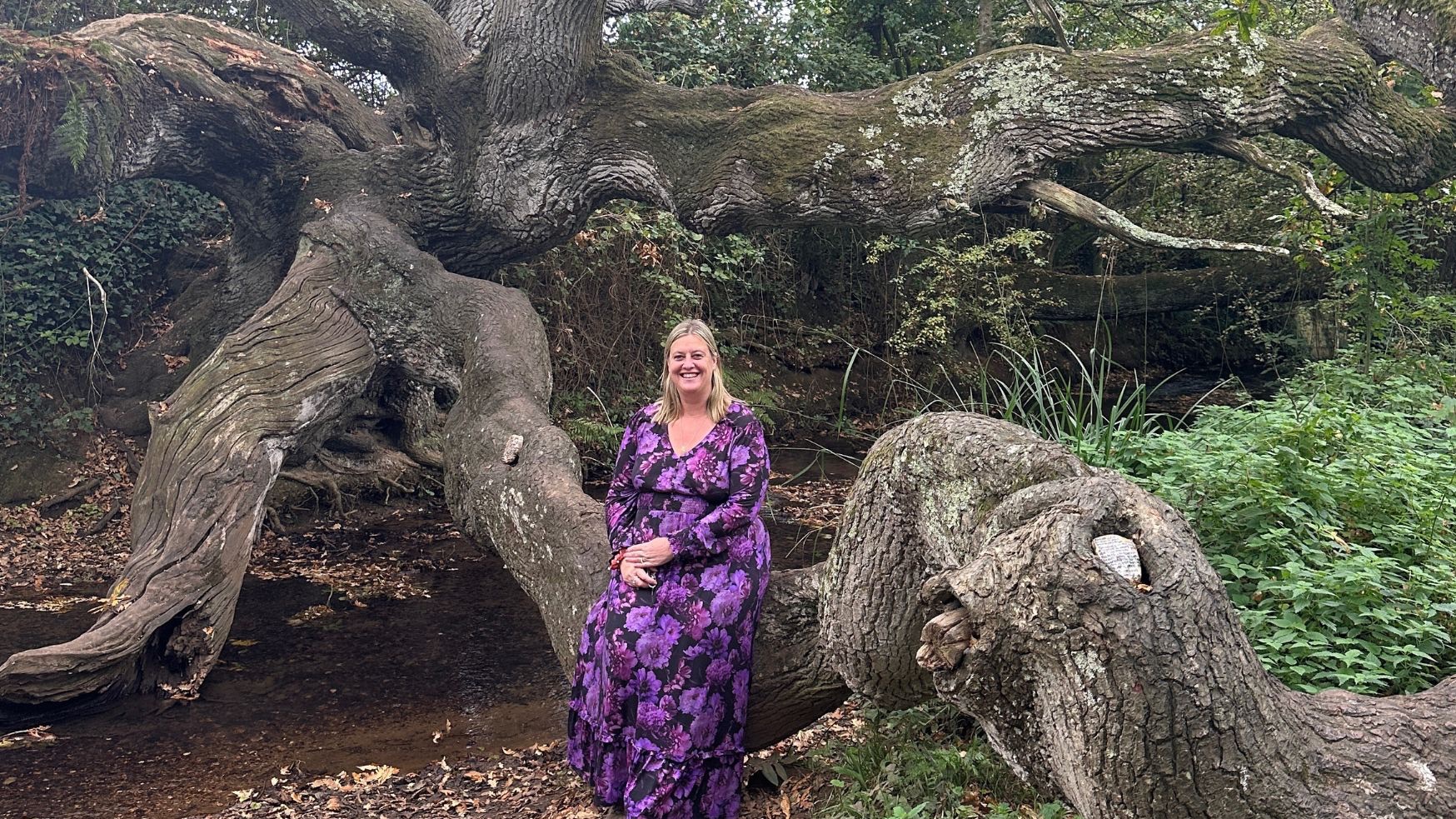
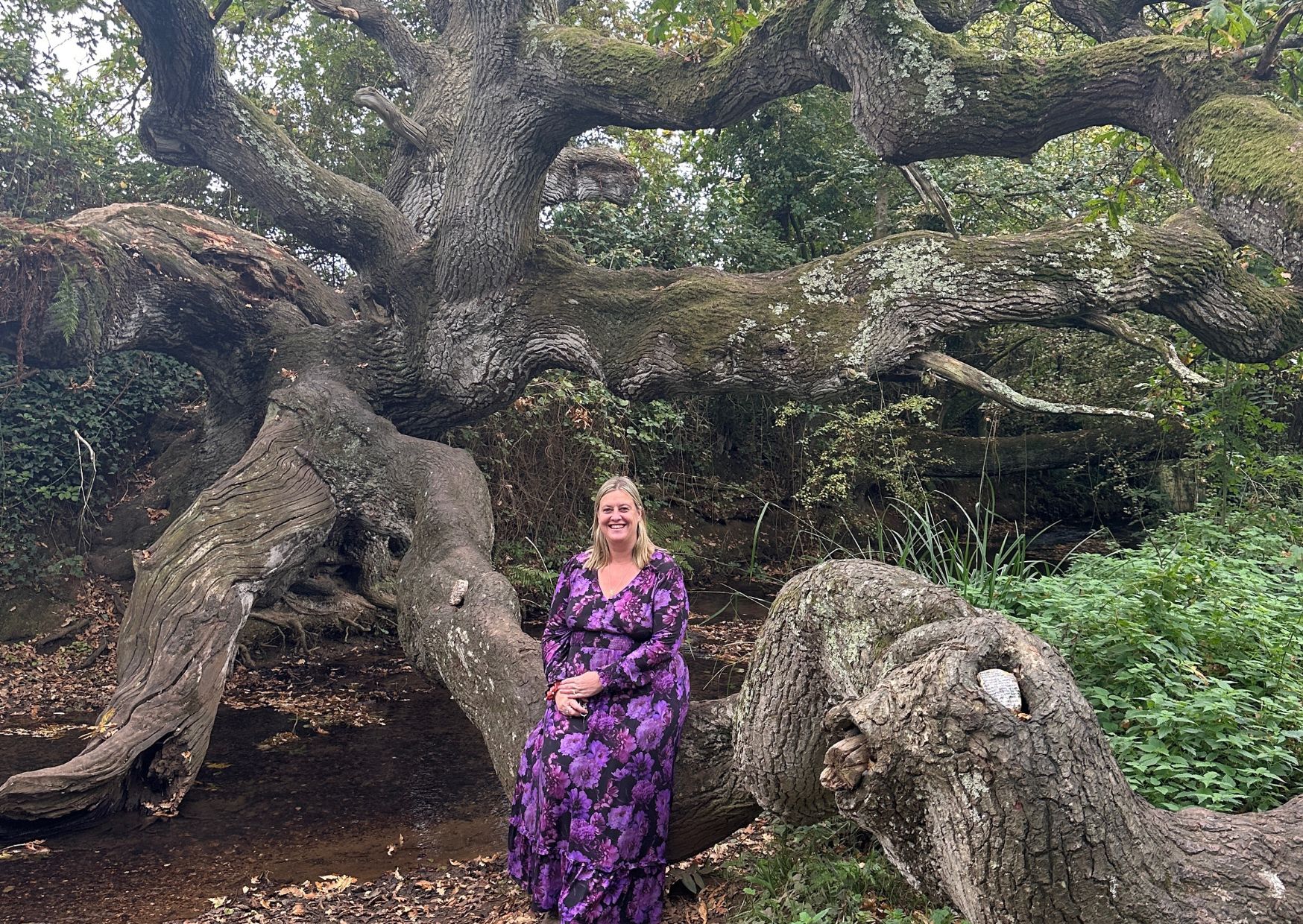
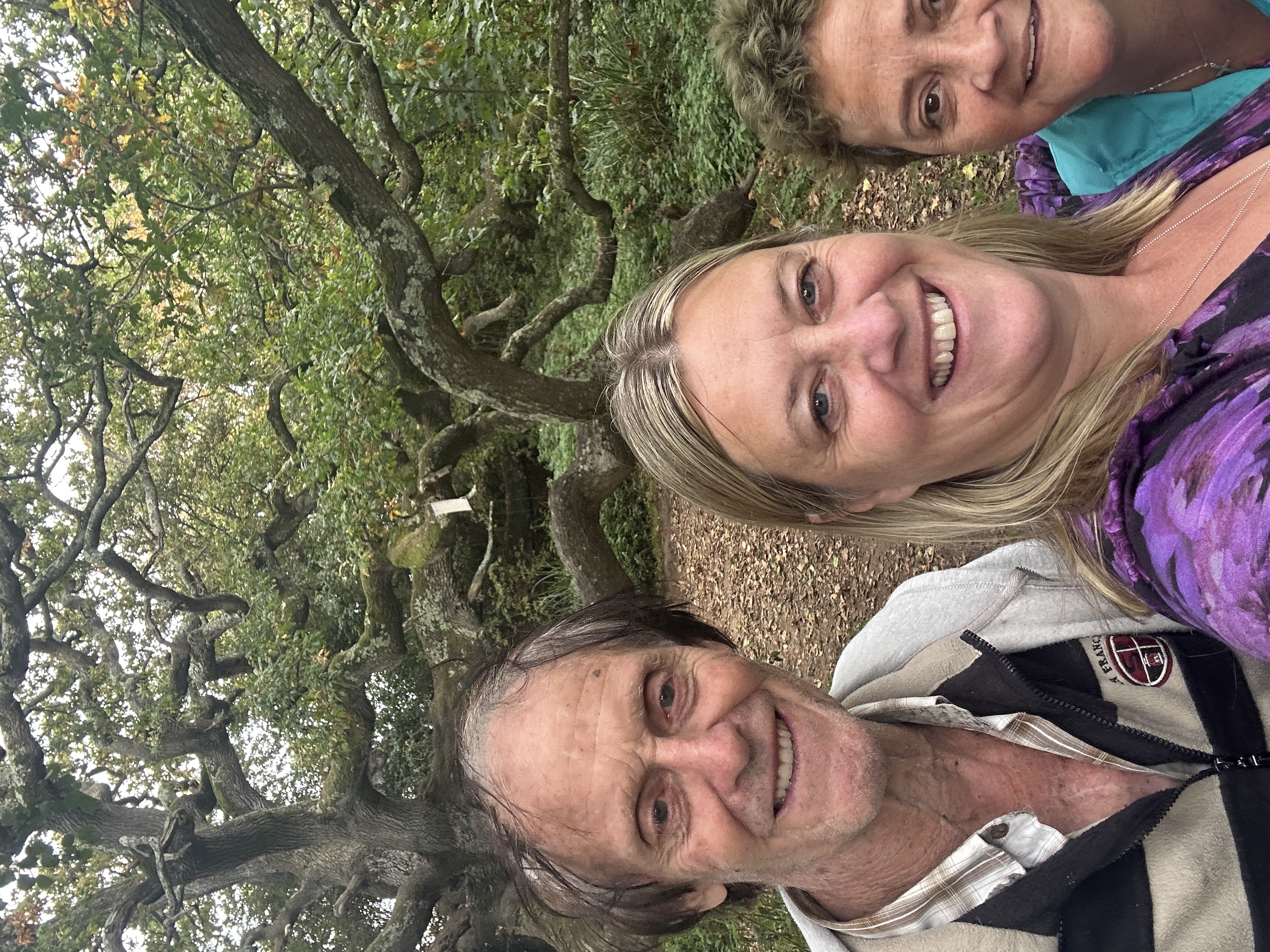
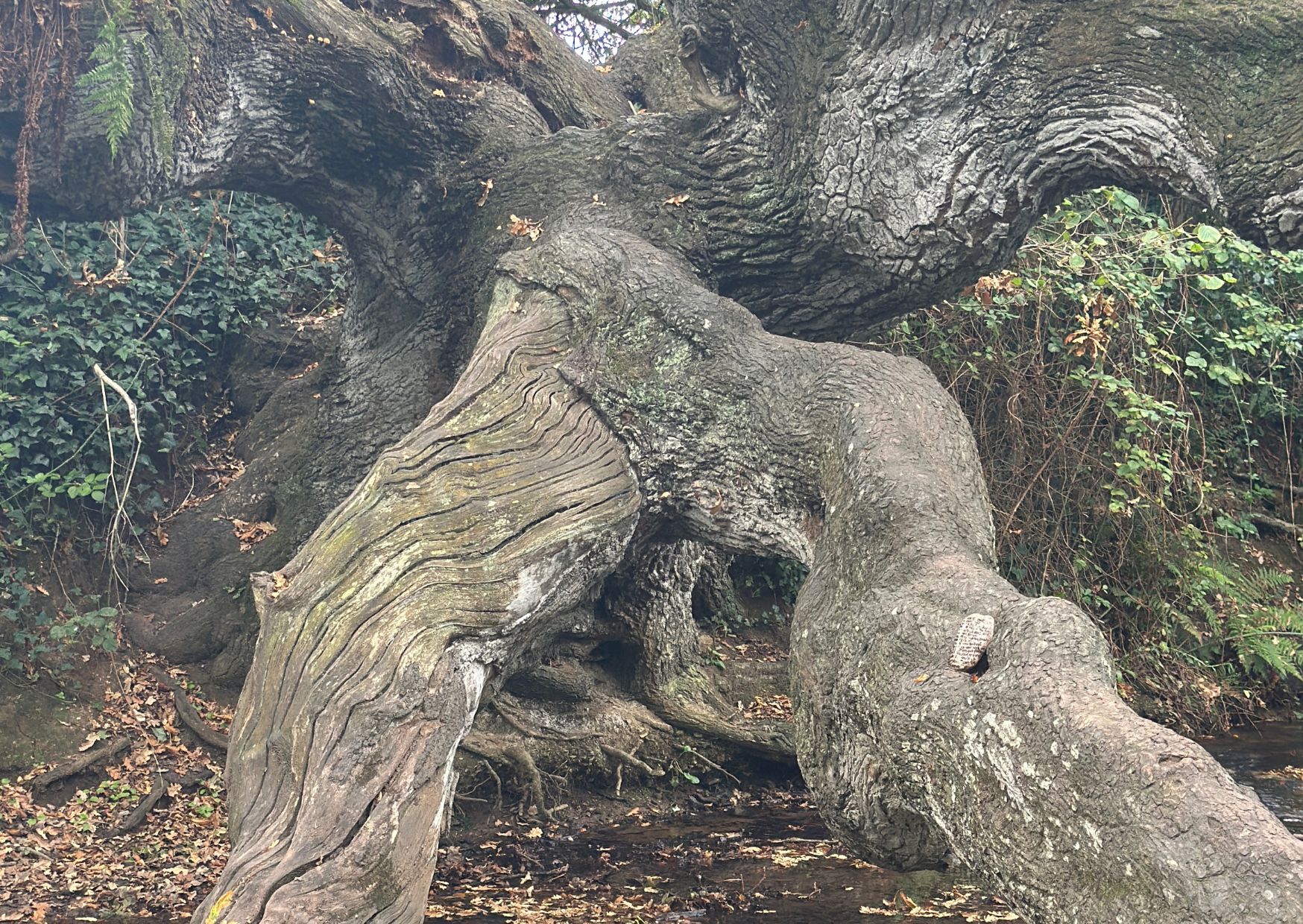
The Dragon Tree is a 700 year old majestic oak, ancient and full of character. It has fallen slightly over time, yet its roots are still strong, deeply anchored into the earth. There is nothing broken about it, instead she holds only wisdom.
It twists and turns, gnarly and alive, growing upwards and outwards in all directions. Its branches are thick and solid, so much so that children climb it, rest on it, play on it. There is laughter here. Joy. Movement. Life.
When I stood before the tree, I could see faces in the branches, little dragon faces emerging naturally from the bark. I will share some of those in the photos below. Once you see them, you cannot unsee them.
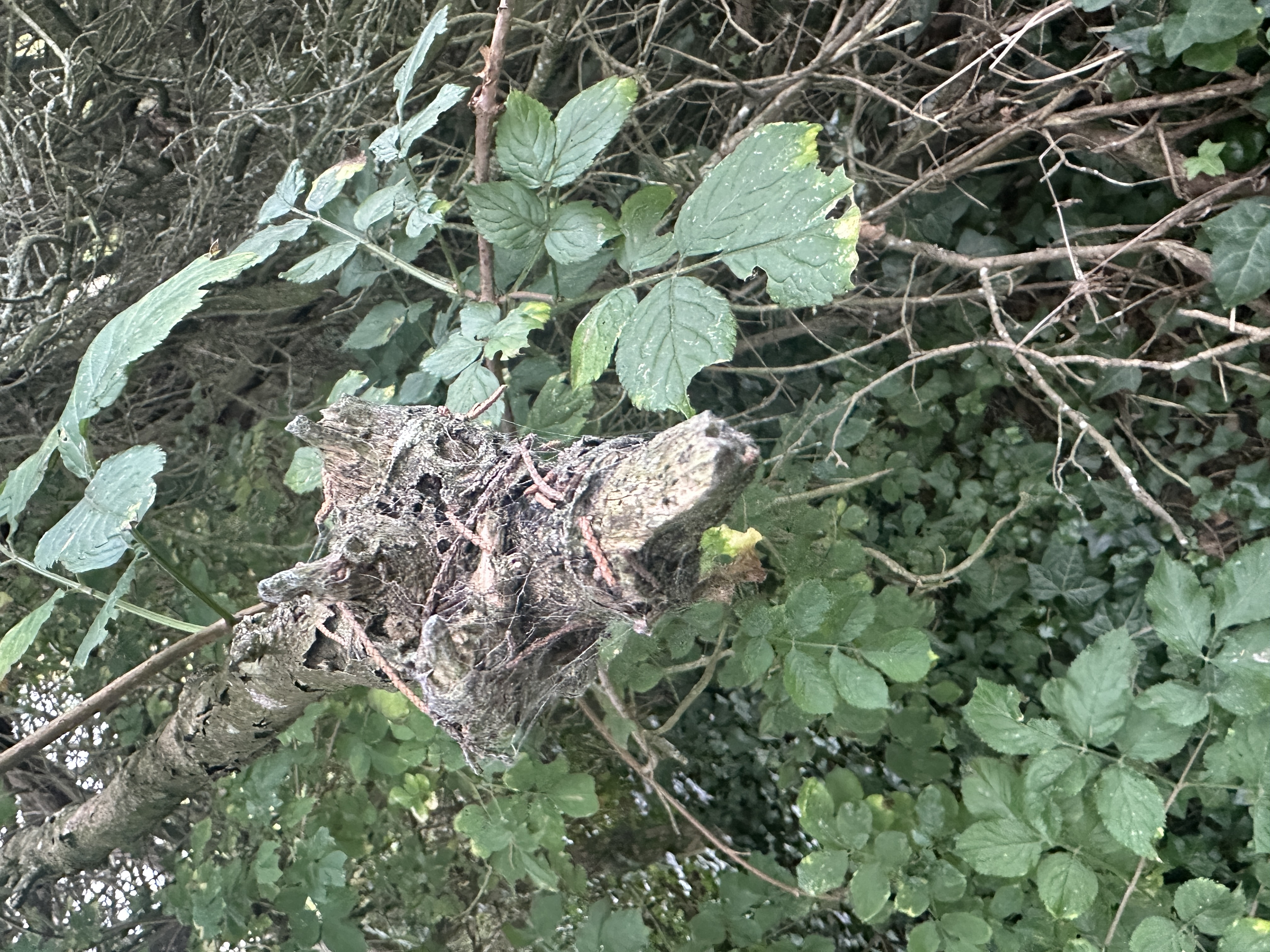
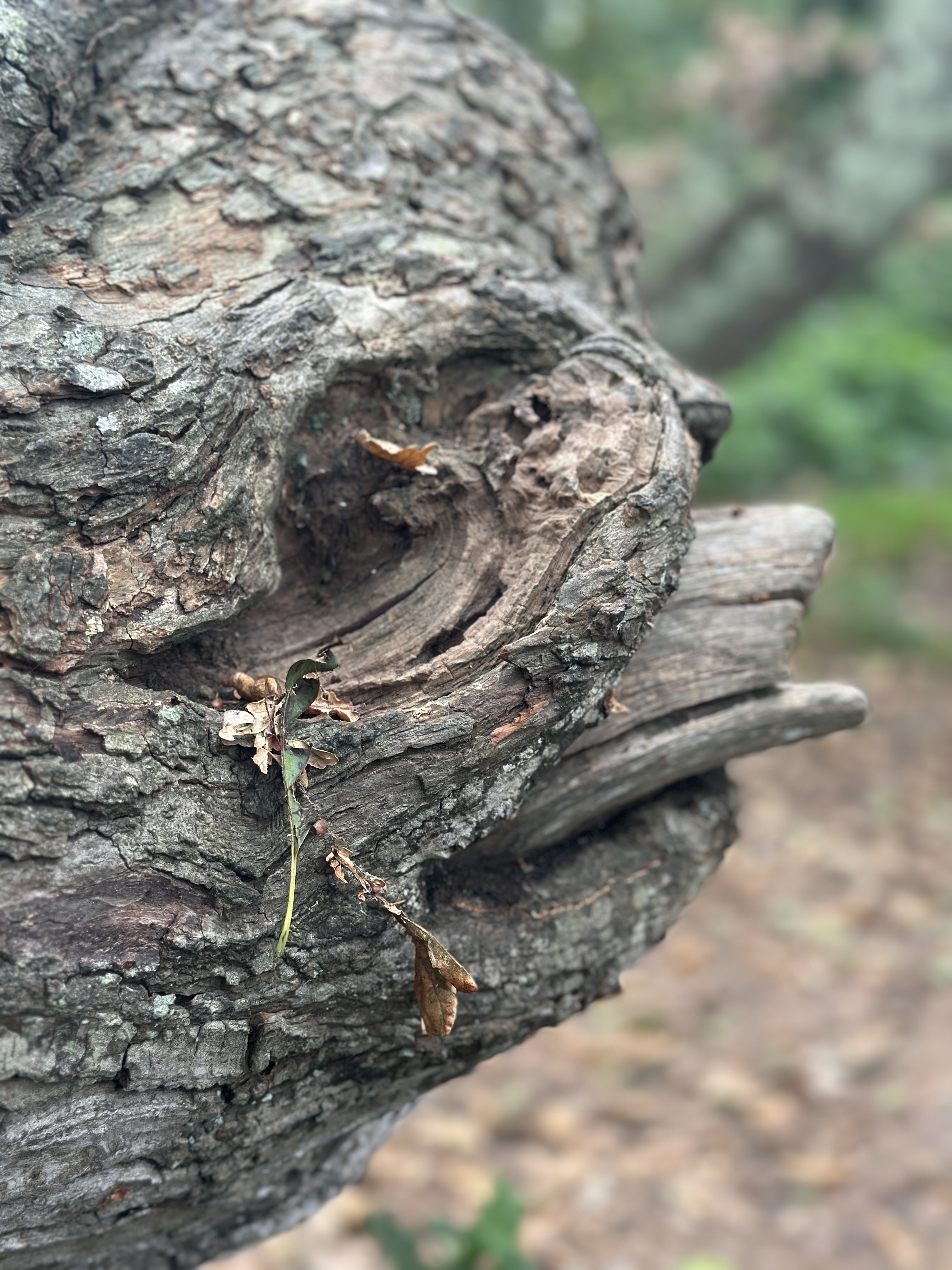
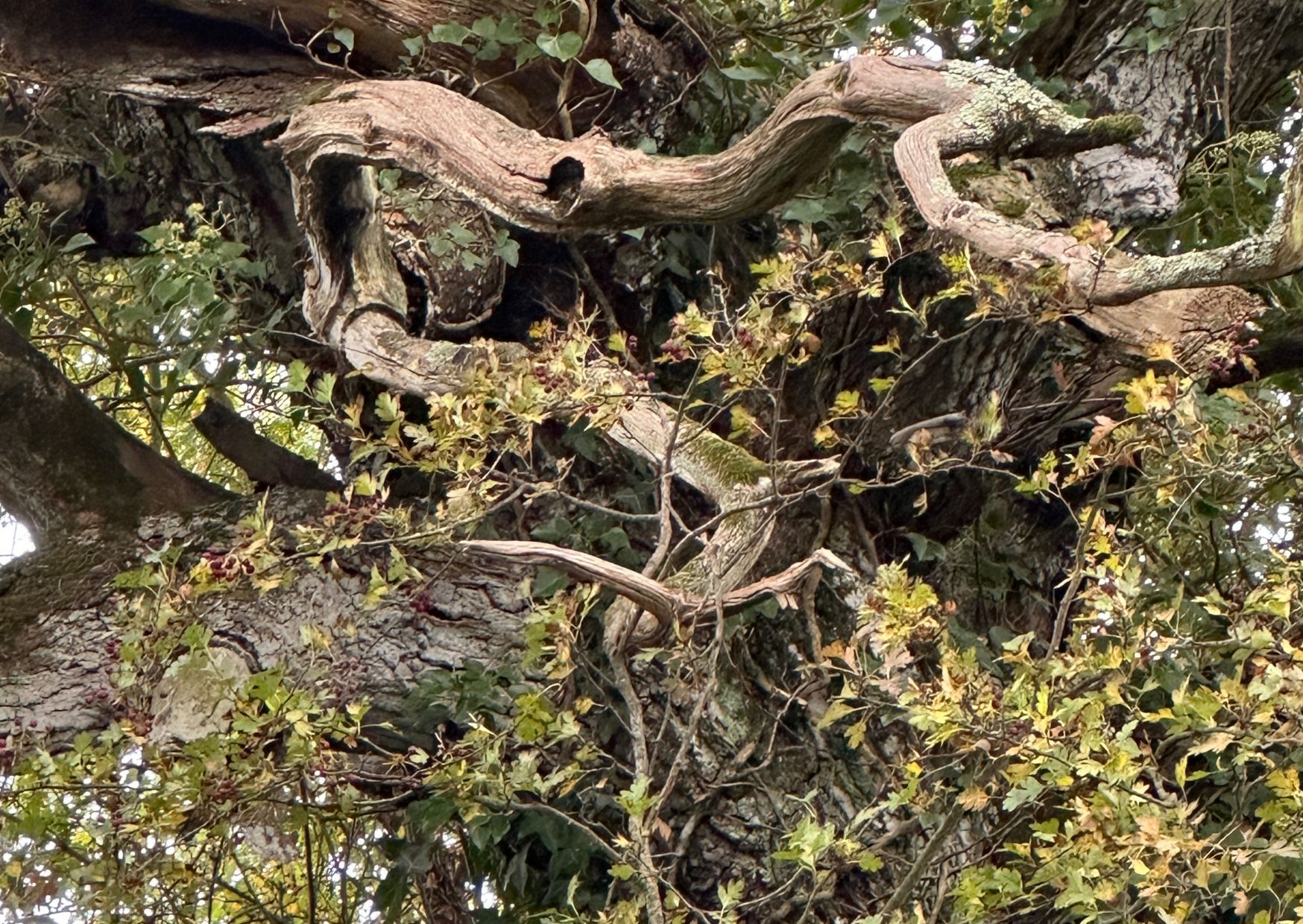 This was not a quiet, solemn tree.
She was grand. And playful. A wise Grandmother tree. Many visitors had left their messages of hope, poems and gift to the trees, something our celtic ancestors used to do known as wyrding.
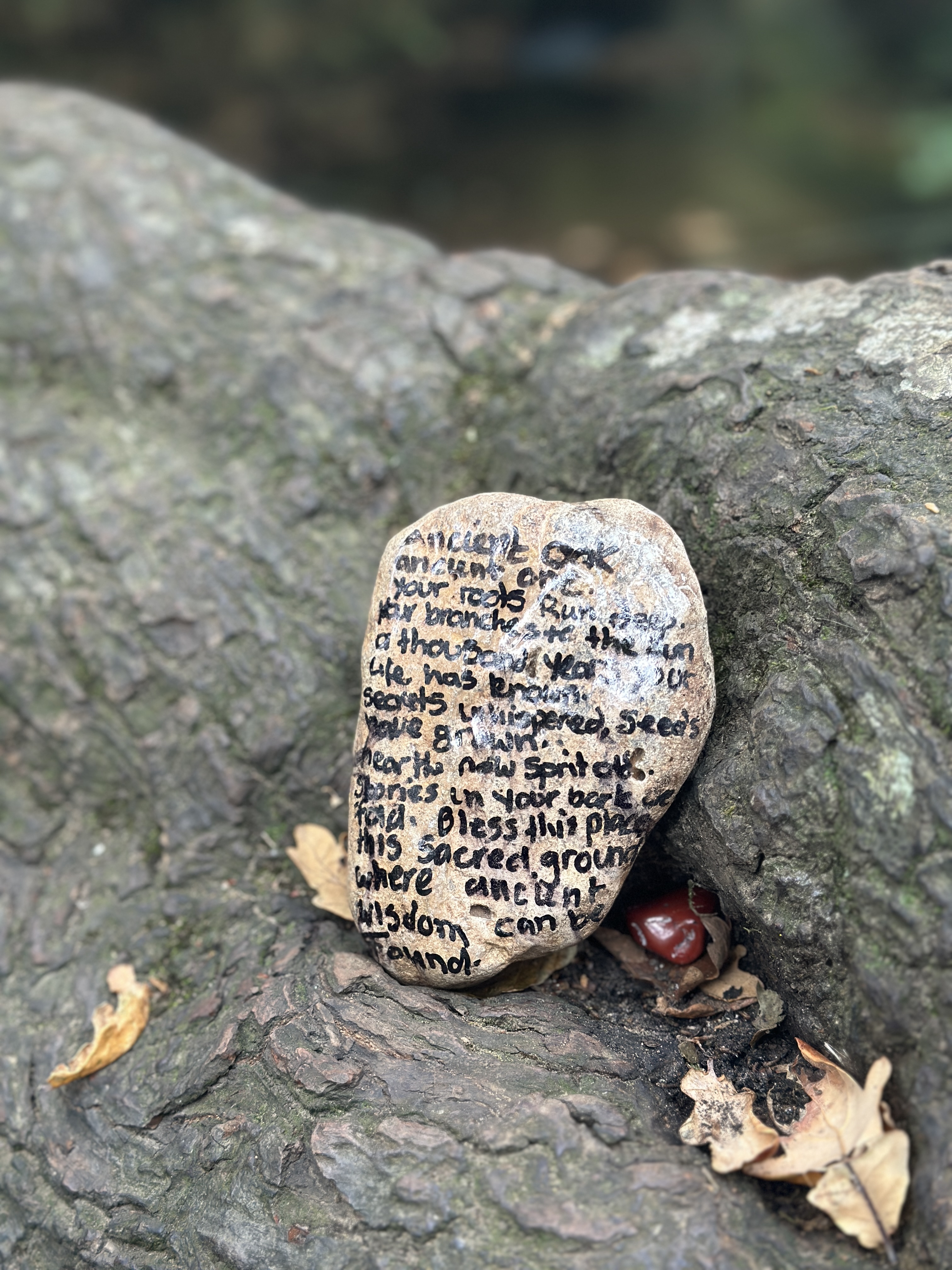
I had brought my dad and my stepmum with me that day, turning the visit into a gentle family outing. There was something deeply grounding about sharing this moment, generations meeting an ancient being rooted in the land.
The Wisdom the Tree Shared
When I connected with the Dragon Tree, its message was clear and surprisingly simple.
Be in your joy.
Be in the present moment.
This was an old tree, carrying what I can only describe as crone energy, the wisdom that comes from having lived, weathered, endured, and continued to grow anyway. Even having fallen, she had not stopped expanding. She was still reaching, still becoming.
The tree showed me how easily we fragment ourselves.
When we live in the past, we carry regret, grief, or stories that no longer serve us.
When we live in the future, we chase the next thing or sit in anxiety about the unknown.
But when we return to the centre and to the present moment, something powerful happens.
The past becomes a source of resilience and gifts rather than weight.
The future becomes a single, soul-aligned step rather than an overwhelming unknown.
From this centred place, our energy is no longer scattered or splintered. It becomes whole.
This is where sovereignty lives.
This is where strength returns.
The Dragon Tree reminded me that grounded presence is not passive. It is powerful. When we anchor ourselves into the now, into our bodies, our joy, our connection with the earth, we hold our full power with clarity and grace.
A Living Teaching
The Dragon Tree is not just a landmark or a legend.
She is a living teaching.
A reminder that even when life tips us sideways, we can remain rooted. That growth does not always look upright. That joy, play, and presence are not luxuries, they are vital expressions of a life lived in alignment.
As I left the tree and walked back across the bridge, back through the springs, I felt that familiar knowing again.
The dragons had called me to the Isle of Wight.
And the land, through this ancient oak, had spoken clearly.
Sometimes the greatest wisdom does not arrive through effort or seeking,
but through listening, standing still, and allowing ourselves to be fully here.
(The Full Channelled Activation to meet the Spirit of The Oak Tree can be found in the Alchemist Codes Module of the Shamanic Dragon Priestess. If you'd like to find out more about this then you can join the waitlist below)
Following the Call: The Oldest Churches of the Isle of Wight
After visiting the Dragon Tree, I felt another calling, this time toward the oldest churches on the island. There was a deep sense that the land wanted to reveal not only its ancient natural spirits but also the layers of its spiritual and cultural history.
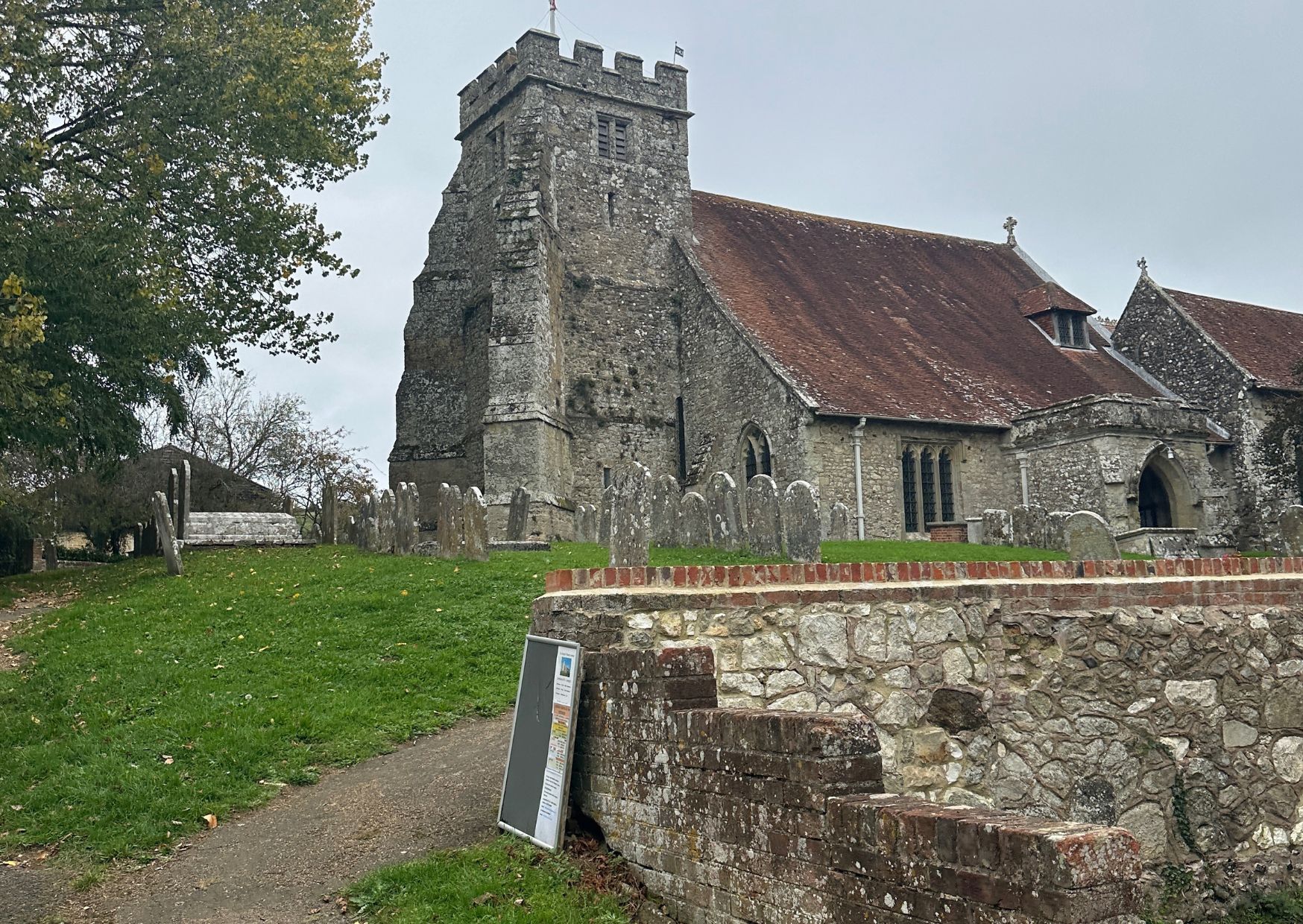
One of the first churches I visited was St George’s Church in Arreton. This church is incredibly old, its origins reach back into the late Saxon and Norman periods, with evidence of Saxon walls and building elements that may date from as early as the 10th century, and significant Norman structure from the 12th century onward. This makes it one of the earliest Christian worship sites on the Isle of Wight and a place of deep historical resonance.
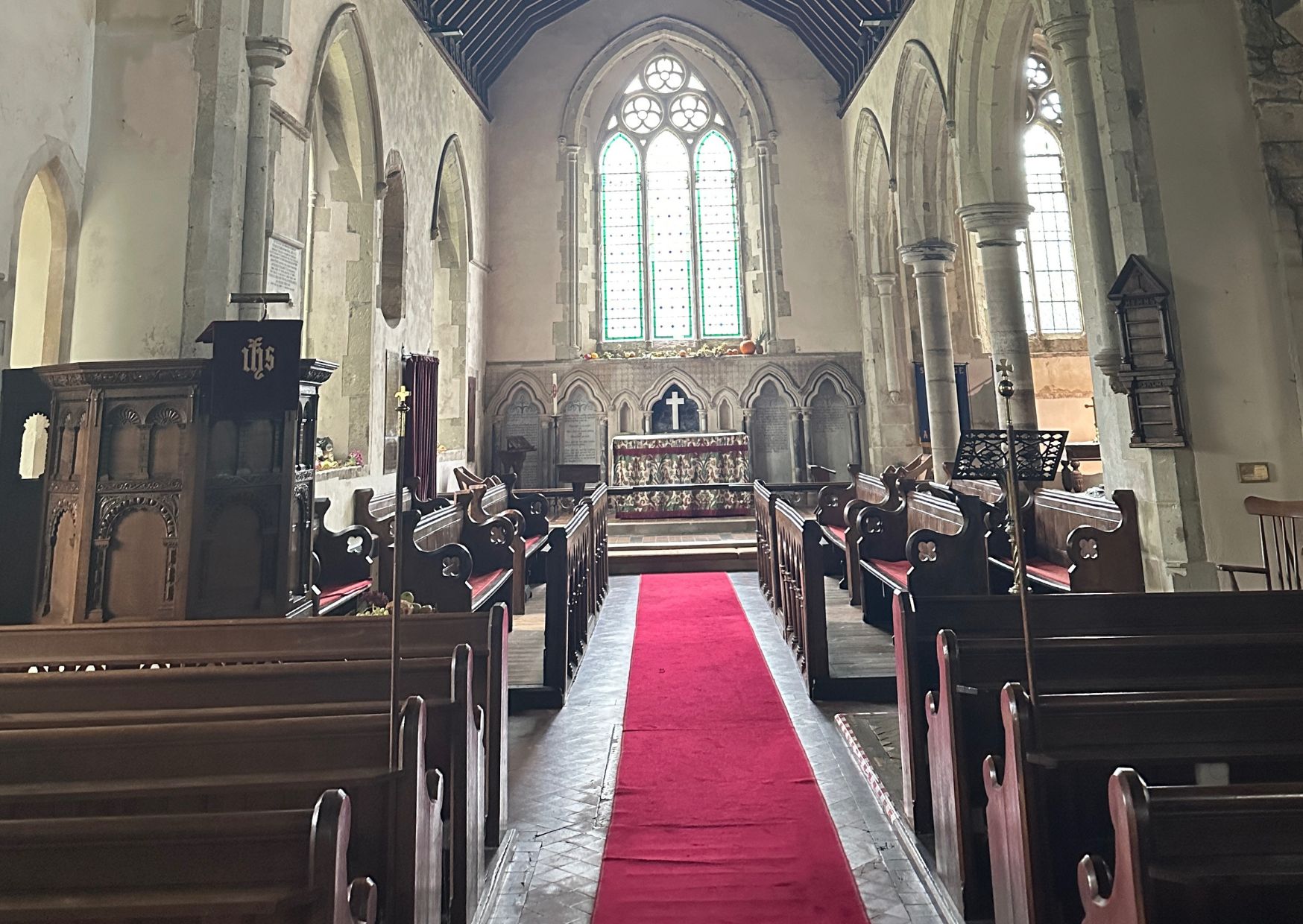
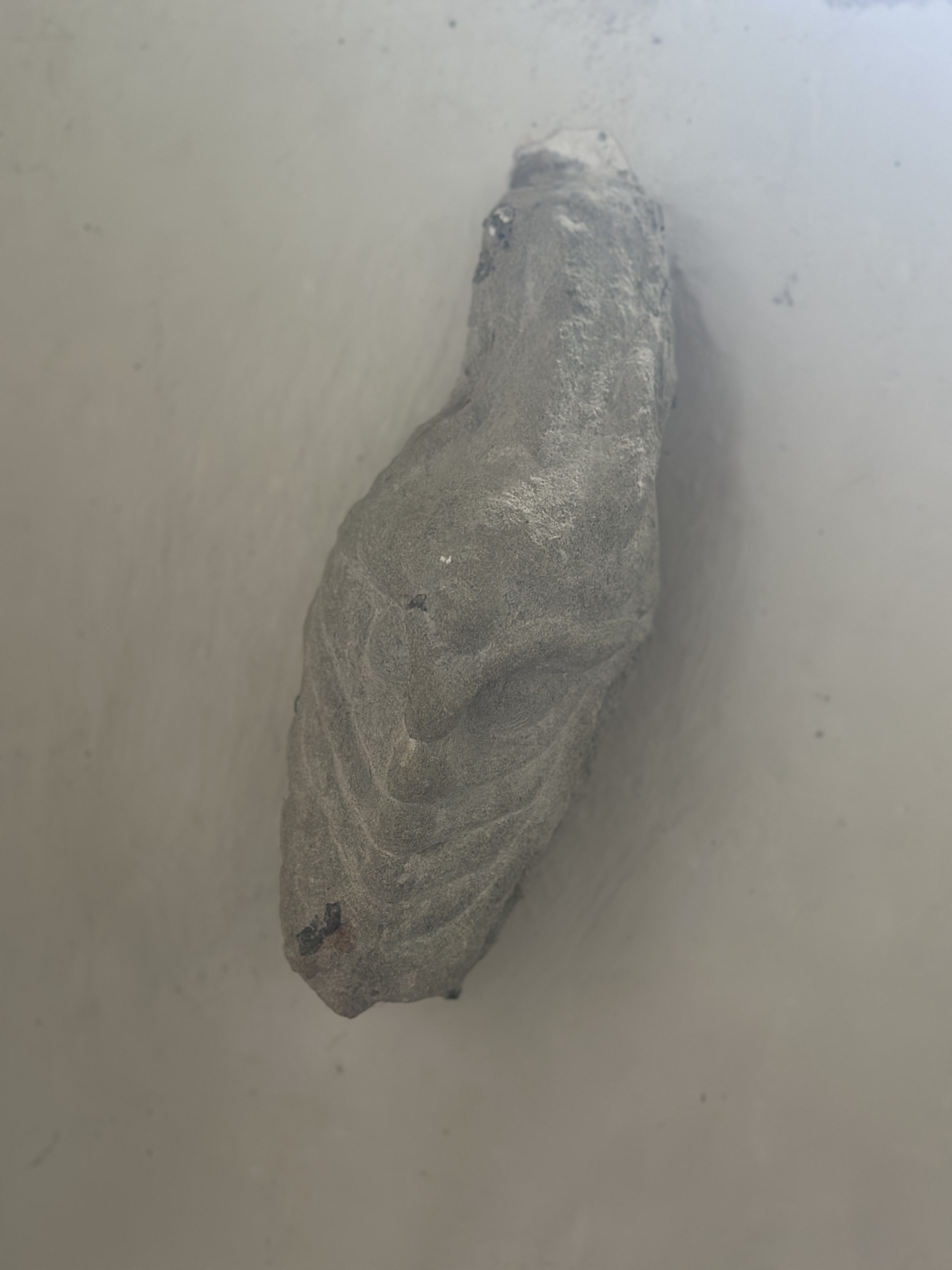
As I stood inside, my eyes were drawn to a carving on the wall, a serpent or snake head emerging from the stone. To many passing visitors it might simply be a decorative or medieval motif. For me, it felt like a reminder of the feminine and the ancient teachings that predate the later Christian overlay. It was as if the land was whispering: “This was a sacred feminine place before it was a Christian church.” This serpent, this presence in stone, reminded me that what lies beneath institutional history is a far older story, one of earth wisdom, of the great mother, and of the cycles of life that are born from the water and return to the earth.
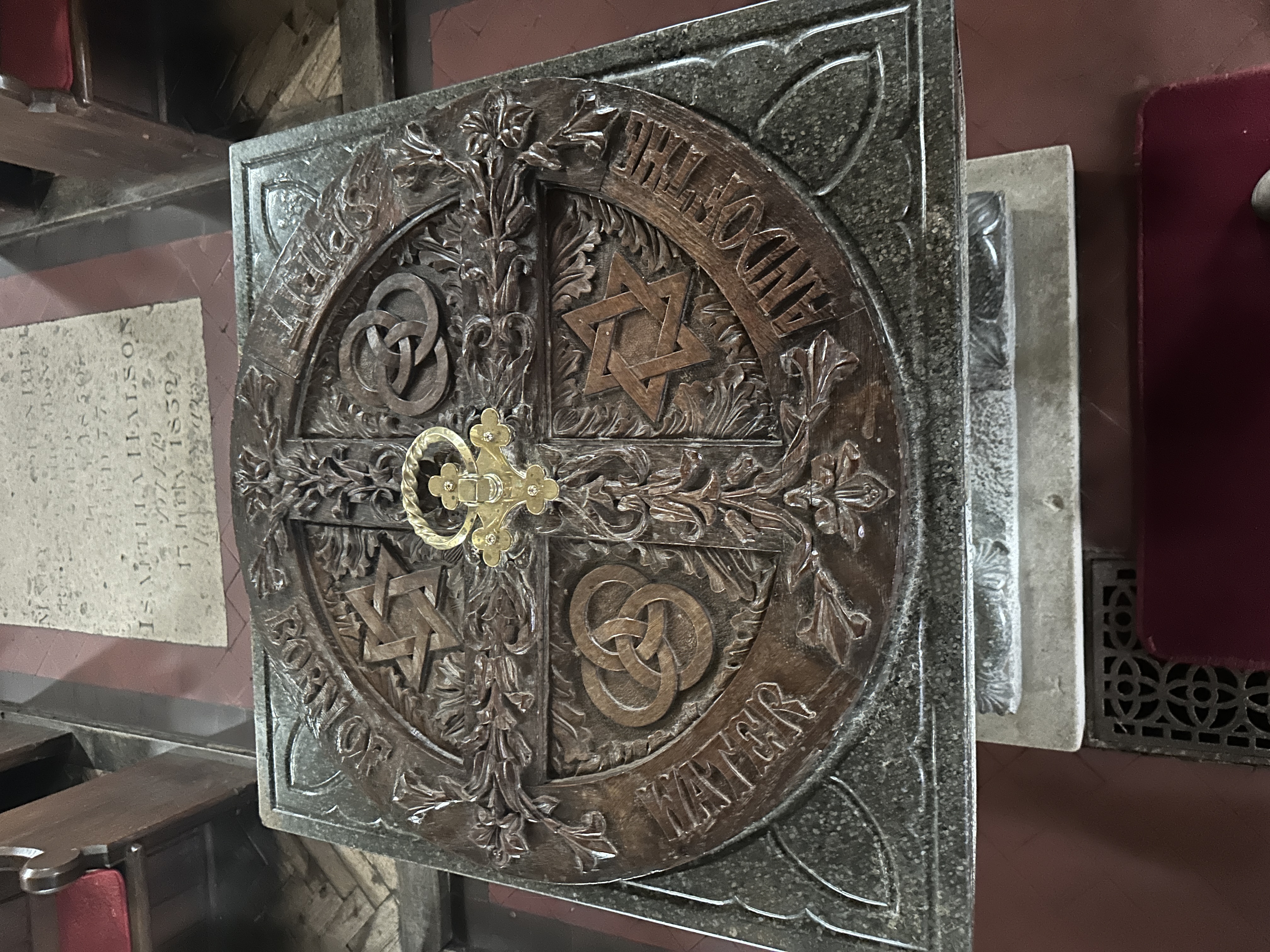
The font inside the church held its own message. At the top was a beautifully carved wooden lid featuring leaves, three rings, and a star, and inscribed with the words:
“Born of water and of the spirit.”
As I stood there with the words born of water and of the spirit, I was also reminded of Tiamat, the great dragon mother. She is of the water. She is the water. The primordial womb from which life first emerged, long before stories were rewritten or power was rearranged.
There was something about being on an island that made this feel even more present. Surrounded by water, held by water, shaped by it. We are born of water too, held in the womb, suspended in the amniotic fluid that nourishes and protects us before we ever take a breath. And beyond that, we know that life itself emerged from the waters. The great mother. The dragon mother. Creation beginning in the feminine.
When I looked at the serpent emerging from the wall, it felt like a quiet remembering of this, not something loud or declared, but something still there, embedded in stone. The dragon didn’t disappear. She was just folded into symbol, into architecture, into the margins of what was allowed to be spoken.
And then there is the spirit. The spark. The fire. The animating breath. For anything to be born, there has to be both. Water and spirit. Feminine and masculine. Womb and flame. One does not exist without the other. It is the union that creates life.
This felt like a much older teaching of Albion, one that honours sacred union rather than separation. Stories like Yeshua and Mary Magdalene hold this far more clearly for me than later teachings that focus only on the father, the son, and the spirit, forgetting the woman entirely. We are not born of ribs. We are born of women. We are born of water.
And here it was, quietly present in this ancient church, in the serpent, in the leaves, in the rings, in the star, in the words on the font. A gentle reminder of what was here before, and what is still waiting to be remembered.
Godshill Church, the Dragon of Power, and the Lily Cross
From Arreton, the call continued and once again, it was unmistakable.
Go and find the dragon.
This time, the journey led me to Godshill, to All Saints’ Church, which sits high on the hill, holding a very different energy to the church at Arreton. This place felt more overtly about lineage, power, and authority, the kind of power that shapes land, people, and history.
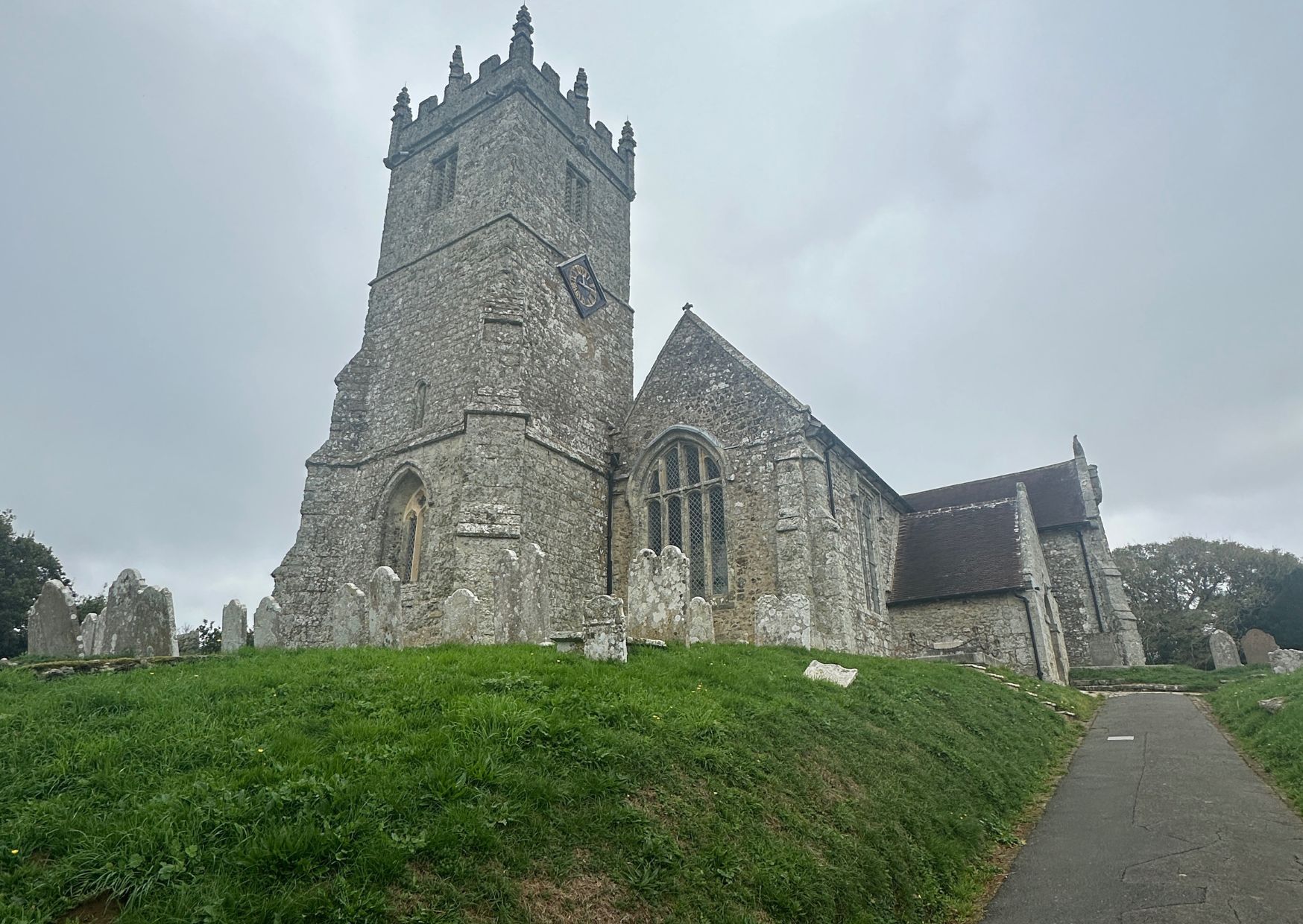
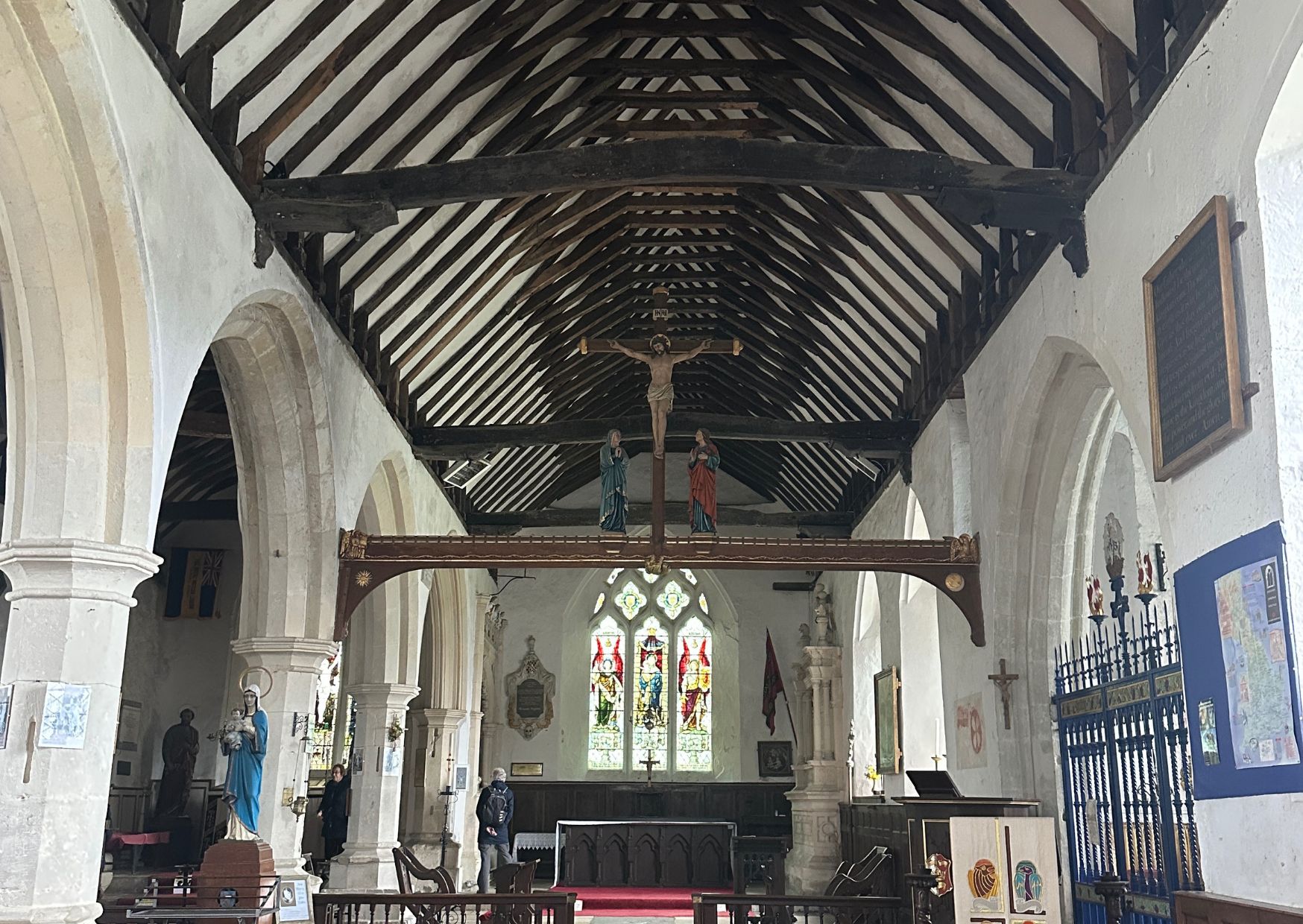
Inside the church, the dragons revealed themselves through the Worsley family, a family who held great wealth and influence on the Isle of Wight. Their presence is marked throughout the church in memorials and heraldic crests carved into stone. And within that heraldry is a wyvern, a dragon-like being, commonly used in family crests to symbolise power, protection, guardianship, and dominance.
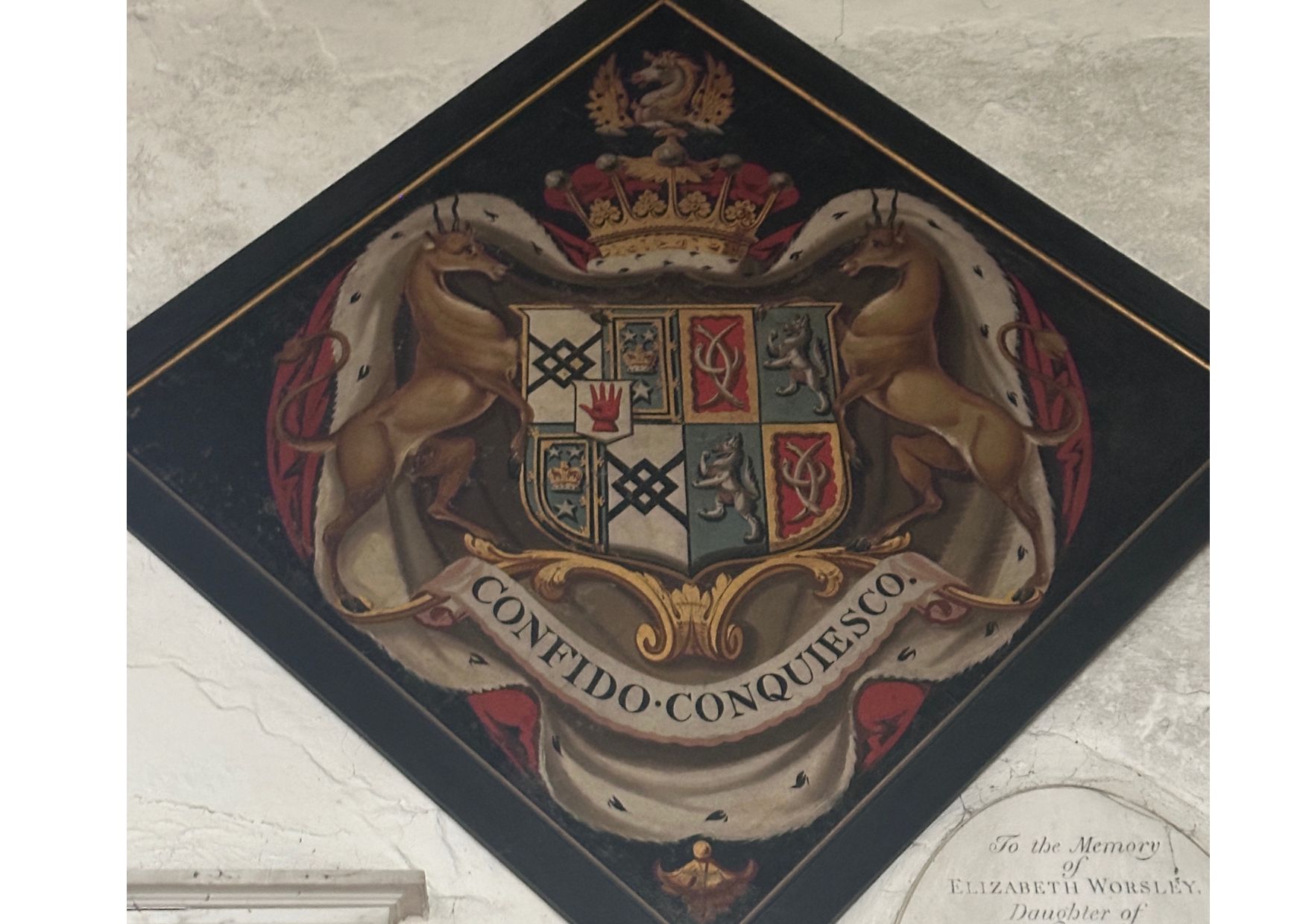
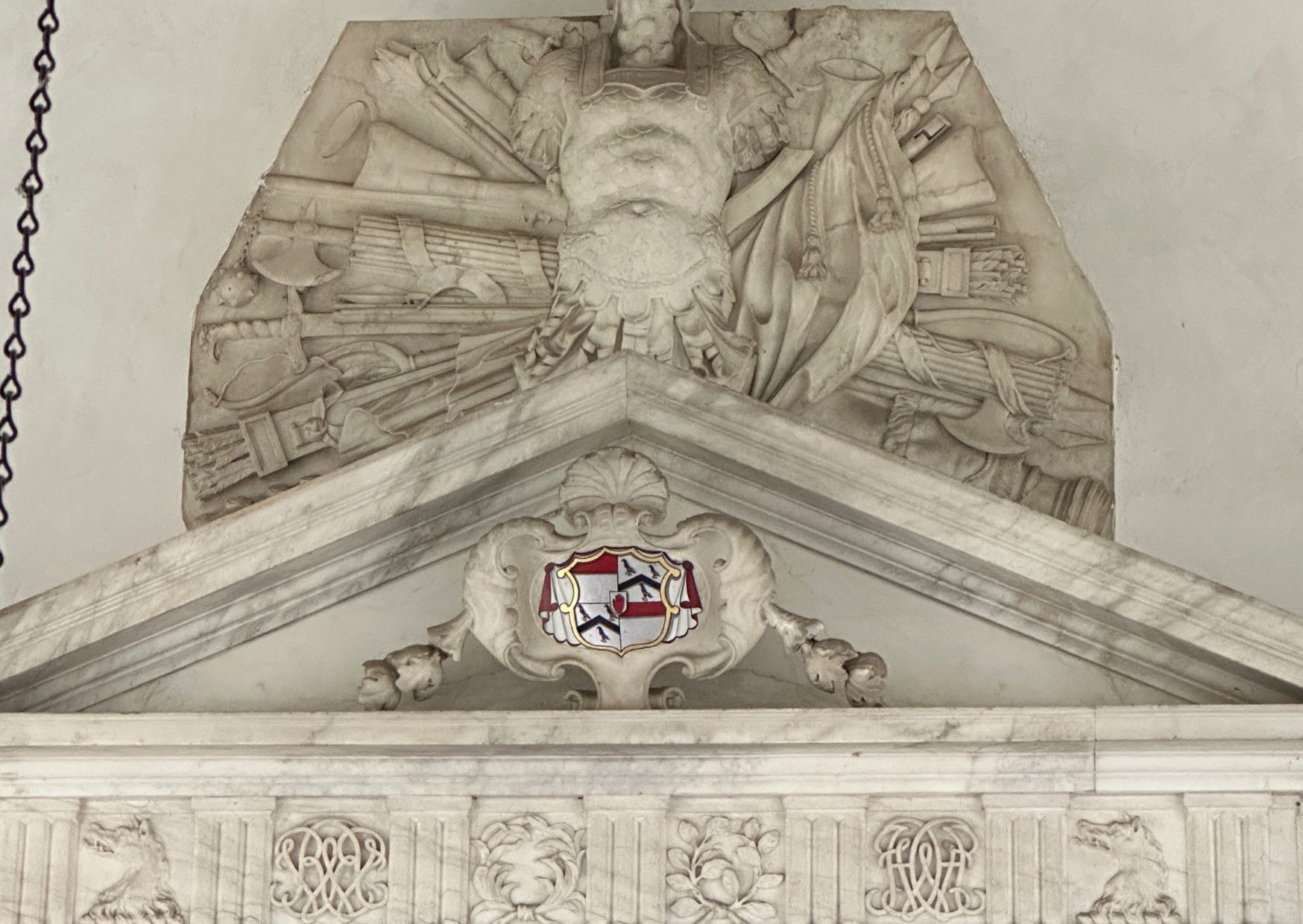
Here, the dragon felt different to the one I met in the tree.
This was not the playful, ancient dragon of the land, it was the dragon of authority. Of territory. Of inherited power. It was a reminder that dragon symbolism has long been claimed by those who rule, even as its deeper, spiritual and feminine roots were being suppressed.
But one symbol stopped me completely.
Among the crests was a swan-dragon.
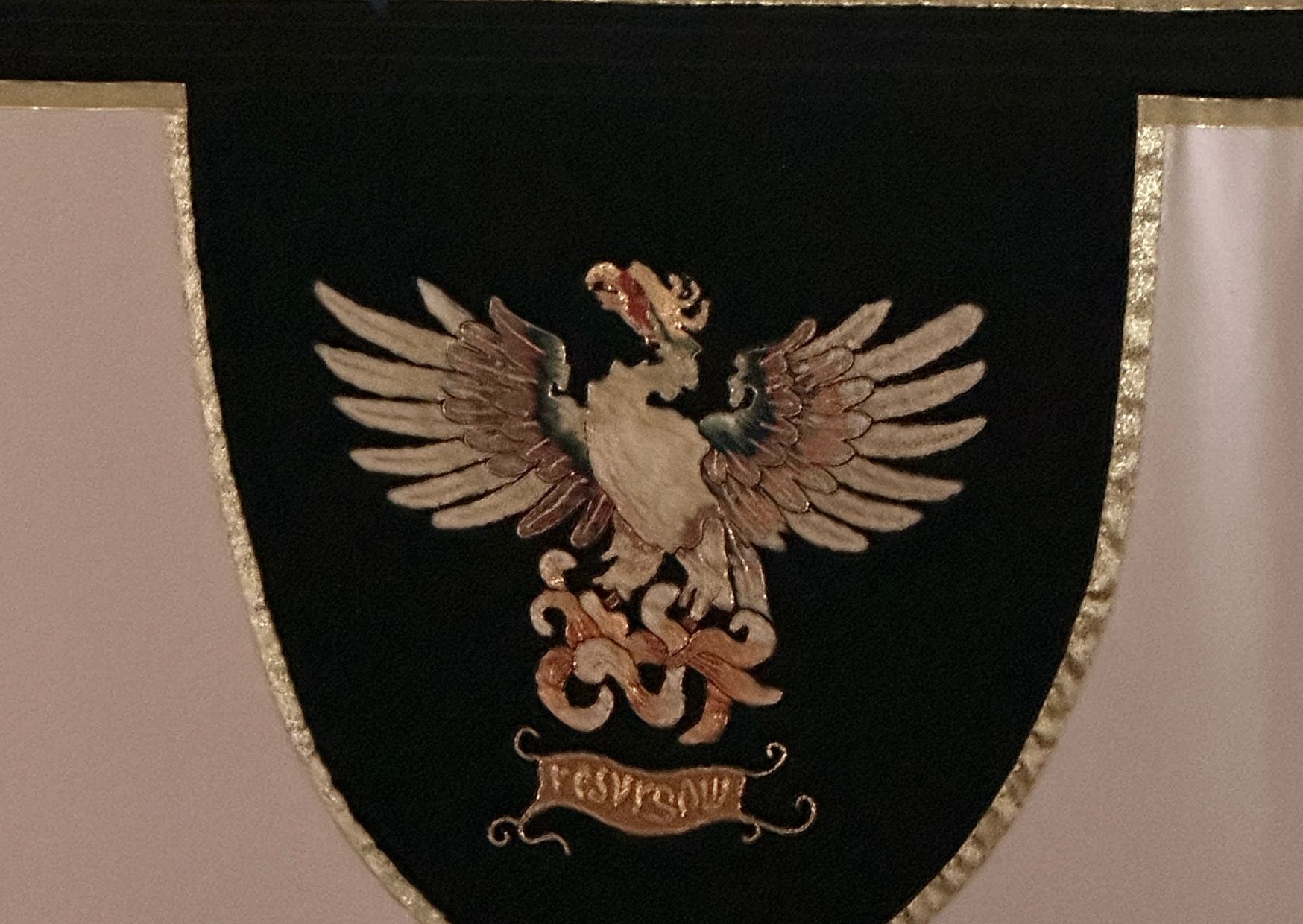
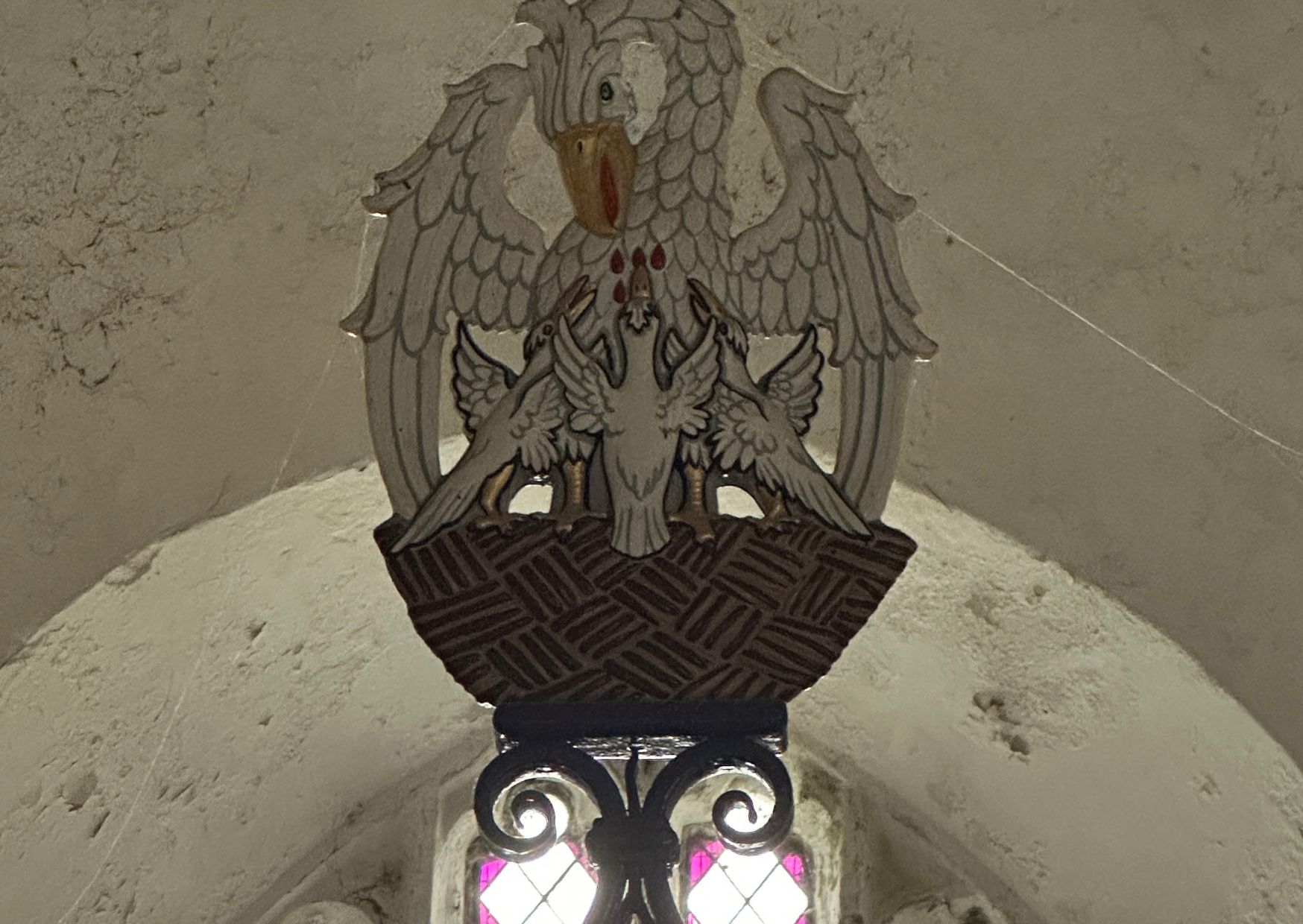
This felt like a doorway.
The swan dragon carries a much older frequency, one rooted in the ancient folklore of Albion. Swans have long been liminal beings, moving between worlds, between water and air, between devotion and mystery. We meet the swan dragon within the Dragon Codes of the Shamanic Dragon Priestess path, and seeing it here, woven into lineage and stone, felt like a quiet confirmation, a remembering rather than a discovery.
It also brought through a deeper reflection for me.
When dragons were no longer allowed to be honoured openly, they did not disappear, they changed form. We began to see angels instead: beings in human shape, with wings and feathers. And yet, many who work with dragons experience them not only with scales, but with feathers too. There is a crossover here. A translation. Perhaps angels became a more acceptable way for ancient dragon energy to continue, softened into something that could survive the shift in belief.
The Lily Cross - What Was Hidden in Plain Sight
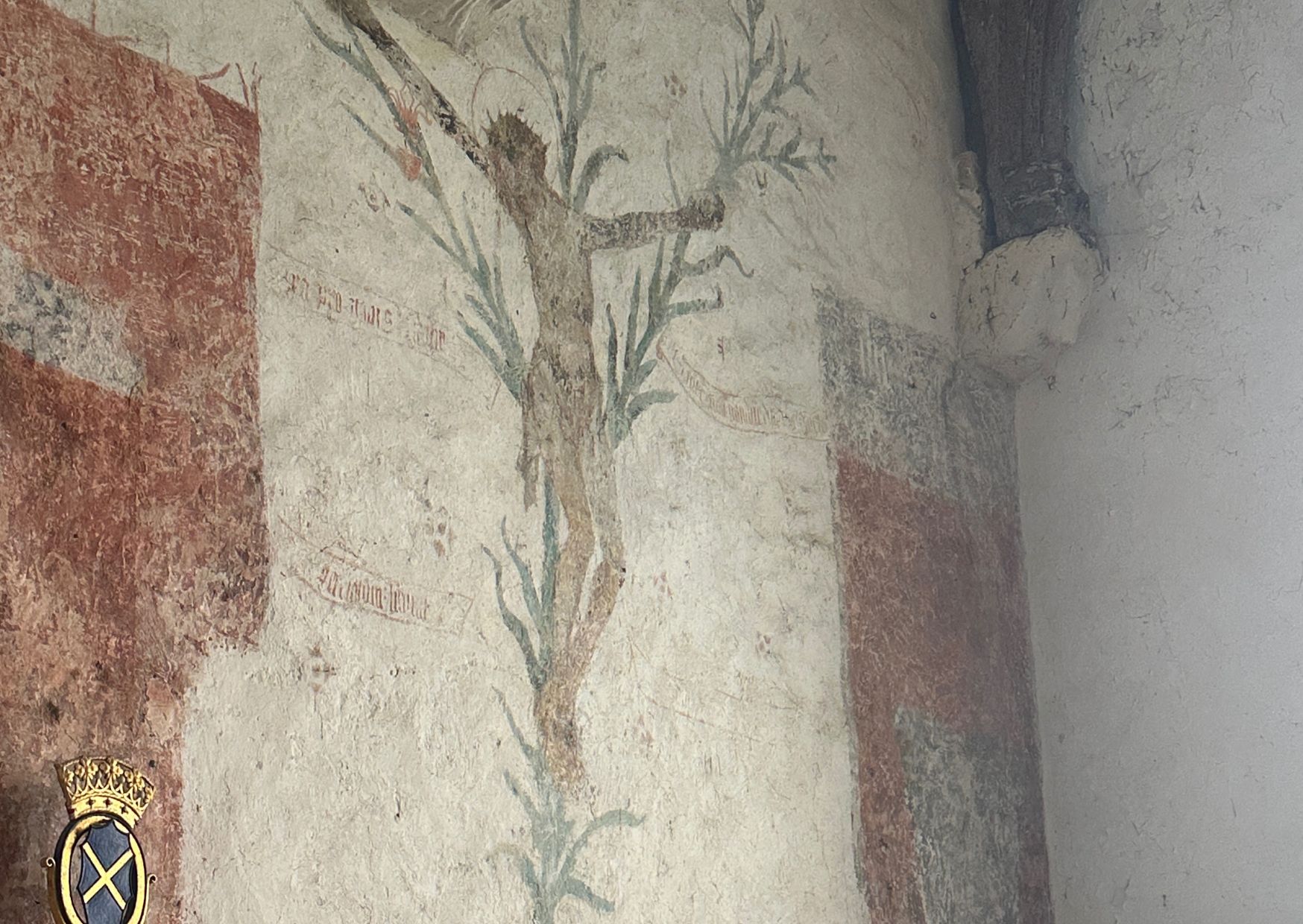
On one of the church walls, protected behind gates, is a very old mural, faded, fragile, but still holding its presence. This is known historically as the Lily Cross.
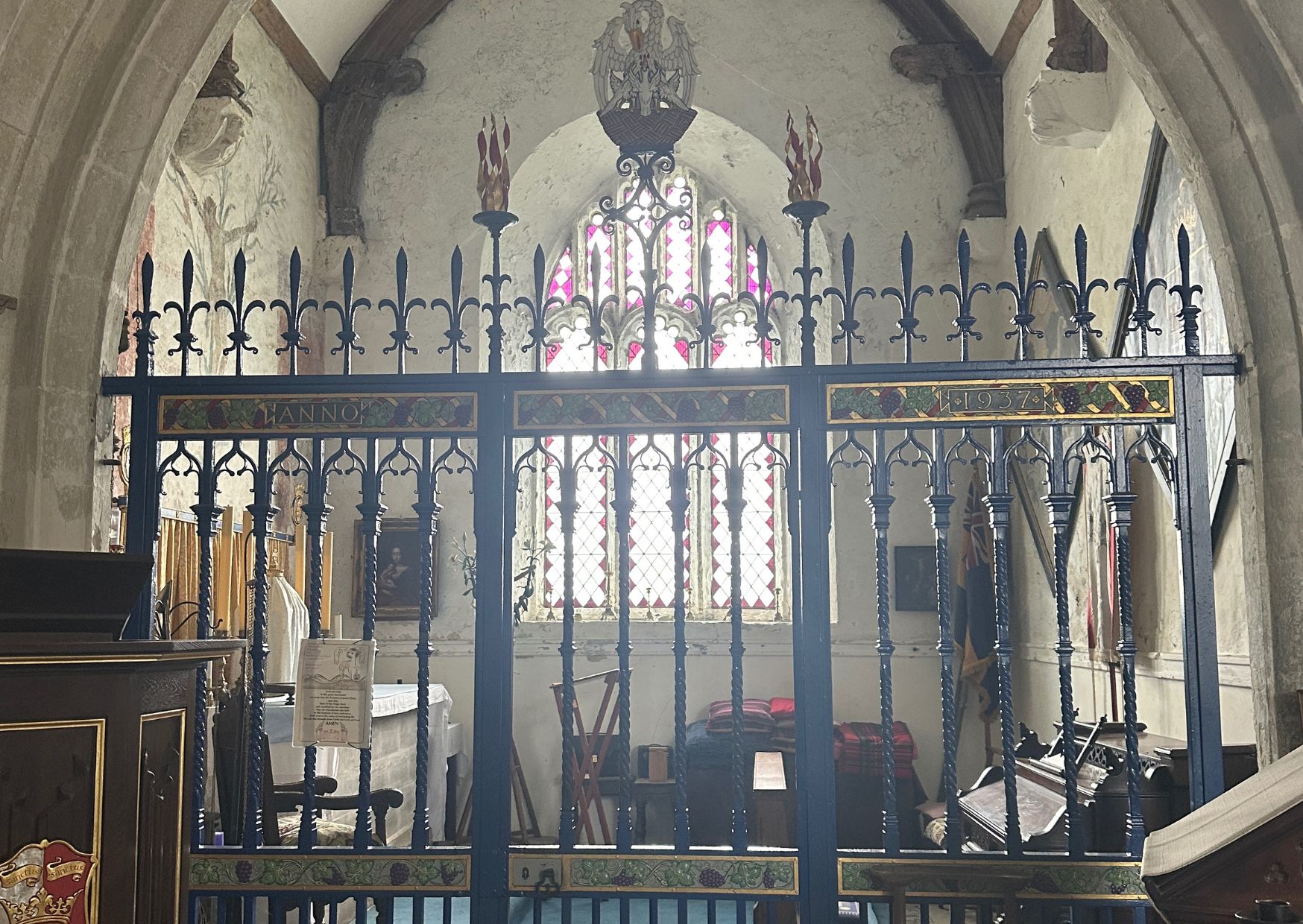
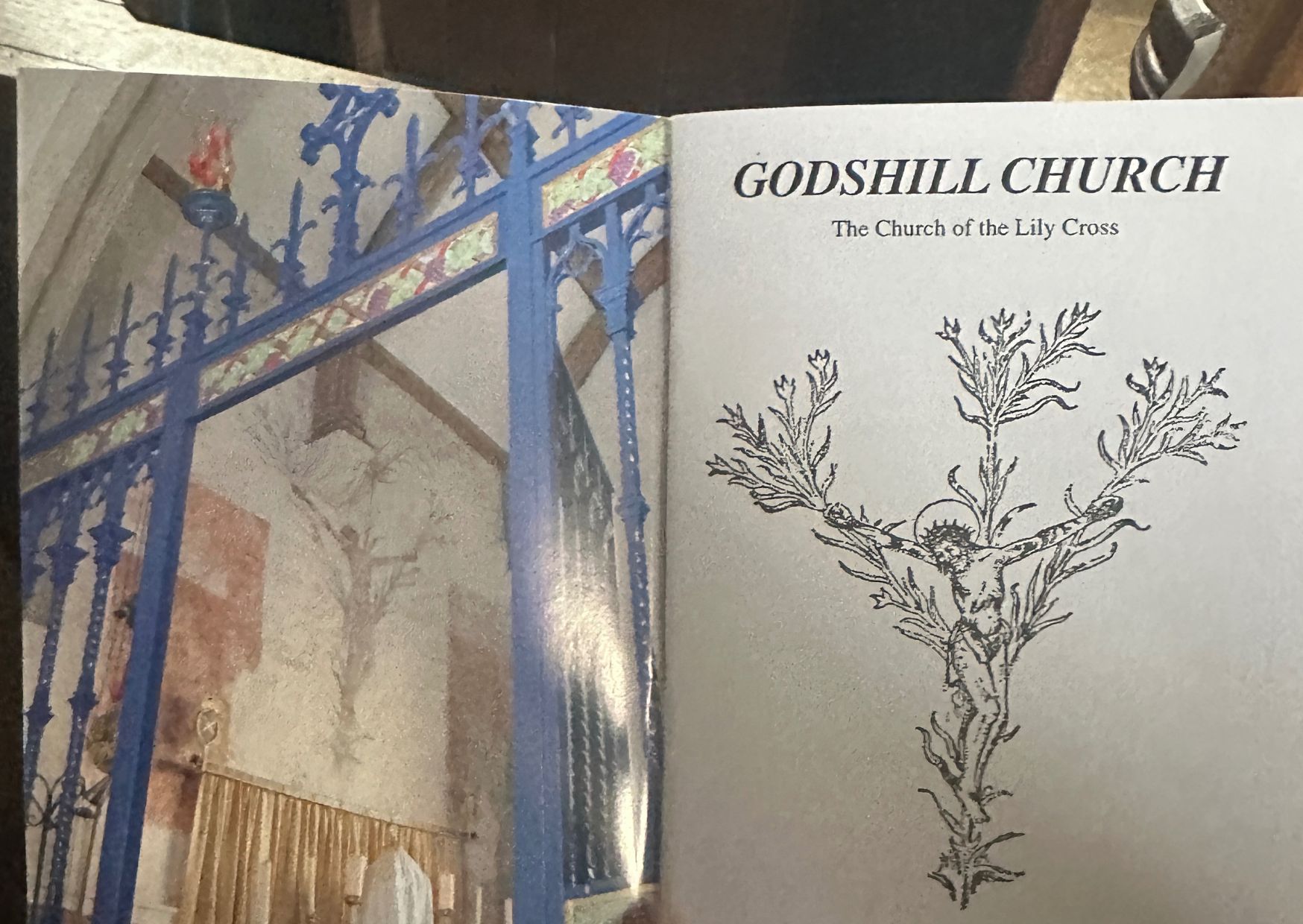
The Lily Cross is a medieval image of Christ crucified, not on a wooden cross, but on a living, flowering plant, a triple-branched, leafy form often associated with lilies. It dates from around the late 15th or early 16th century and was later hidden beneath whitewash during the Reformation, only to be revealed again centuries later.
And this is where it becomes interesting.
The Lily Cross is not just about suffering, it is about life, regeneration, and rebirth. The lily has long been associated with purity, the womb, the feminine, and new life. The triple branching can be seen as the body, soul, and spirit, or past, present, and future, all rooted in living earth rather than dead wood.
To me, this felt like yet another place where the older teachings had not been fully erased, only layered over.
A crucifixion that is also a flowering.
A death that is also a continuation of life.
Spirit not separated from nature, but growing through it.
Standing there, it felt as though the dragon, the swan, the lily, and the cross were all speaking the same language, just through different symbols. Power had been claimed and reshaped here, yes, but the deeper story was still present for those willing to feel beyond doctrine and into remembrance.
Godshill Church felt like a place where dragon energy had been reframed, but not destroyed, held in crests, in stone, in wings, and in flowers.
Still watching.
Still waiting.
Still whispering the older stories of Albion.
Homeward Bound...

As I left the Isle of Wight, I was left with a deep sense that nothing I had encountered was random.
The Dragon Tree.
The springs and the bridge.
The serpent in the church wall.
The words born of water and of the spirit.
The dragons, the swan, the lily cross.
All of it felt like a quiet conversation between land, stone, tree, and memory.
The dragons have never truly left this land. They live in the roots of ancient trees, in the flow of water beneath our feet, in the symbols carved into churches, and in the stories that refuse to be forgotten. They live in the union of water and spirit, feminine and masculine, earth and sky.
Albion remembers.
And perhaps these places are stirring now because we are ready to remember too, not by tearing anything down, but by seeing more deeply. By recognising that what came before still breathes within what came after.
The Isle of Wight did not just feel like a place I visited.
It felt like a place that recognised me.
And maybe that is what pilgrimage truly is, not travelling to somewhere sacred, but allowing the land to remind you of what has always lived within you.
Follow the Next Thread
Every path through the Mystery School begins with a single thread. Take the Priestess Archetype Quiz to discover which Foundation Code is calling you.
Stay connected with the latest news and inspiration
Join my mailing list to receive updates on new courses, podcast episodes, events, and seasonal wisdom.
Your information will never be shared, and you can unsubscribe at any time.
We hate SPAM. We will never sell your information, for any reason.
